

TLDR (too long didn’t read): What you need to know
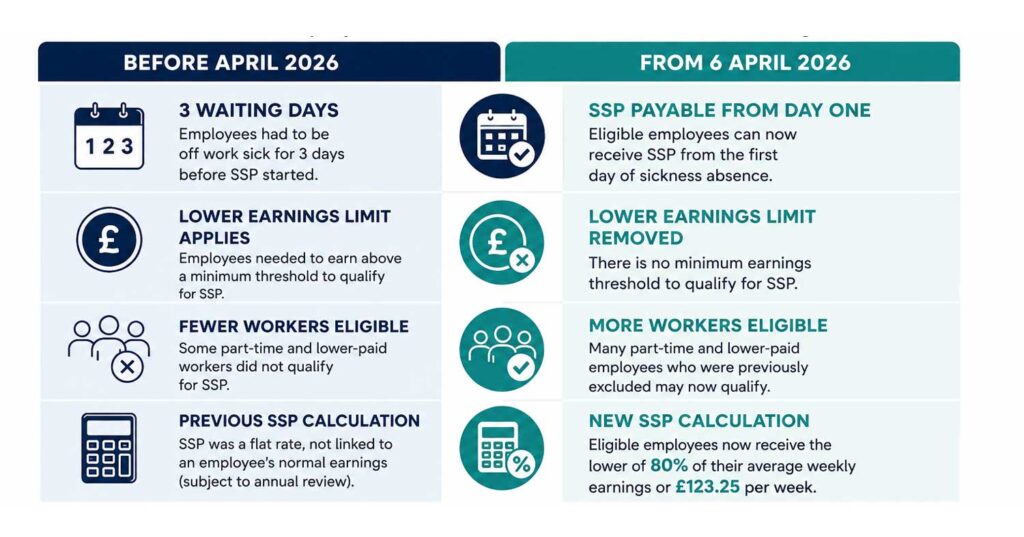
Statutory sick pay (SSP) changed from 6 April 2026. The three waiting days have been removed, the Lower Earnings Limit no longer applies, and eligible employees can now receive SSP from the first day of sickness. SSP is also calculated differently, at either 80% of average weekly earnings or £123.25 per week, whichever is lower.
At a time when many UK employers are already managing rising employment costs, these changes are worth understanding. While they are unlikely to create major disruption for most businesses, they may increase SSP costs and affect a wider proportion of your workforce than before.
What changed to statutory sick pay in 2026?
From 6 April 2026:
- SSP is payable from the first day of sickness absence
- The Lower Earnings Limit has been removed
- More employees are now eligible for SSP
- SSP is paid at 80% of average weekly earnings or £123.25 per week, whichever is lower
These Statutory Sick Pay changes are designed to make sick pay available to more workers and provide support earlier during periods of illness.
Why these SSP changes matter
Employment costs continue to be a key consideration for many UK business owners.
From wage increases and pension contributions to National Insurance and compliance requirements, employers are balancing a growing number of responsibilities.
Against that backdrop, the Statutory Sick Pay changes came into effect on 6 April 2026.
The reforms are designed to make sick pay available to more workers and provide support earlier during periods of illness. For employees, that may offer greater financial security. For employers, it means understanding a new set of rules and considering the impact on payroll costs and workforce planning.
For many businesses, the changes will be manageable, particularly where payroll is professionally managed or supported by modern software. However, the changes are significant enough to warrant attention, especially for employers with part-time, lower-paid or flexible workforces, as these groups may have previously not been eligible to receive SSP.
SSP is now payable from day one
One of the most notable Statutory Sick Pay changes is the removal of the three waiting days that previously applied to SSP.
Under the old rules, employees generally had to be off work sick for three days before SSP became payable. From 6 April 2026, eligible employees can receive SSP from the first day of sickness absence.
For employers, this means that some shorter absences which previously incurred no SSP payment may now result in a cost.
While the impact will vary between businesses, employers may notice an increase in SSP payments over the course of a year, particularly where short-term absences are common.
More employees now qualify for SSP
The Lower Earnings Limit has also been removed.
Previously, employees needed to earn above a minimum threshold to qualify for Statutory Sick Pay. Under the new rules, that earnings requirement no longer applies.
As a result, many part-time and lower-paid workers who were previously excluded may now be eligible.
For businesses that rely on flexible staffing models, this could significantly increase the number of employees entitled to SSP.
How is SSP now calculated?
The calculation method has changed too. Eligible employees now receive the lower of:
- 80% of their average weekly earnings
- £123.25 per week
This means SSP is more closely linked to an employee’s normal earnings while maintaining a statutory cap.
For most employers, payroll software should calculate this automatically, but understanding the principle behind the change can help when forecasting costs and answering employee questions.
What do the SSP changes mean for employers?
The practical impact will vary depending on the nature of your workforce, but there are a few common themes businesses should be aware of.
SSP costs may increase
The combination of day-one entitlement and wider eligibility means some employers will see higher SSP costs than under the previous system.
For many businesses, the increase may be relatively modest. However, employers with larger workforces, significant numbers of part-time staff, or higher levels of sickness absence may notice a more meaningful impact.
Workforce planning becomes more important
The reforms highlight the importance of understanding absence patterns and their financial implications.
While no business can predict illness, having visibility over sickness trends can help with budgeting, staffing decisions and operational planning
Payroll processes need to be up to date
Most payroll providers and software platforms have already implemented the necessary changes.
However, employers should still be confident that payroll systems are applying the new rules correctly and that internal policies reflect the current position.
This is particularly important for businesses that process payroll in-house.
Practical considerations for business owners
The changes do not require most employers to overhaul their processes, but they do create a good opportunity to review a few key areas:
- Check that payroll software has been updated to reflect the new SSP rules
- Review employee handbooks and sick pay policies where necessary
- Consider whether wider SSP eligibility could affect staffing costs
- Ensure managers understand the basics of the new rules
- Speak to your accountant or payroll provider if you are unsure how the changes apply to your business
Taking a proactive approach now can help avoid confusion later and ensure your business remains compliant while supporting employees appropriately.
Statutory Sick Pay FAQs
When did the SSP changes come into effect?
The changes took effect on 6 April 2026.
Is SSP now paid from the first day of sickness?
Yes. The previous three waiting days have been removed and eligible employees can now receive SSP from day one of sickness absence.
Can part-time workers receive SSP?
Potentially yes. The removal of the Lower Earnings Limit means more part-time and lower-paid employees may now qualify for Statutory Sick Pay.
How much SSP can an employee receive?
Eligible employees receive the lower of 80% of their average weekly earnings or £123.25 per week.
Will the SSP changes increase employer costs?
Some employers may experience higher SSP costs due to wider eligibility and the introduction of day-one payments.
Need help reviewing your payroll processes?

The Statutory Sick Pay changes are relatively straightforward, but it’s important to ensure your payroll systems and policies are up to date.
If you’re unsure how the new rules affect your business, we’re here to help.
If you’re new to Harland, book a free discovery call to explore how we can support you with values-aligned financial strategy, growth planning to fuel your impact, and advisory support that helps you make confident, well-timed decisions.
About the author
James Rickard
James has been with us for over four years and forms a key part of our payroll team. He has extensive experience in payroll administration and enjoys helping clients navigate legislative changes with confidence and clarity.