

TLDR (too long didn’t read): What you need to know
Most of the conversation about workplace wellbeing focuses on what employers owe their teams, with very little space given to the pressure of leading a business. Deborah Edwards, Harland’s Practice Director, reflects on why the strongest workplaces are the ones where the leader’s wellbeing is taken seriously too, and shares ten practical lessons from her experience of running a purpose-led firm.
About the author: Deborah Edwards
With over 20 years’ experience, Deborah Edwards is a Chartered Accountant, business mentor and Director at Harland, helping purpose-led business owners improve performance through clearer financial insight and better decision-making.

Right now, it often feels as though the responsibility for employee wellbeing and mental health sits entirely with the employer, with very little recognition that those running today’s businesses are themselves significantly challenged on many fronts.
With Mental Health Awareness Week this month (11-17 May), it’s a useful moment to check in on this properly. In my musings, I feel the conversation is often incomplete. We talk about supporting employees, which absolutely matters, but we do not always acknowledge that the way a business is led is what ultimately determines whether that support is real or just well intentioned. It reminds me slightly of the safety briefing on a plane where you are told to put on your own oxygen mask before helping others. Not because the people around you matter less, but because you are far less able to support anyone properly if you are overwhelmed yourself.
I am acutely aware that employing people is not just about delivering a service. It carries responsibility not only to the individuals in the business but to the lives connected to them, including their families, their mortgages and their sense of stability. The income a business provides flows far beyond the workplace, and that reality shapes how decisions need to be made. At the same time, employing people has become more complex, more regulated, and more expensive. Getting it wrong is not just uncomfortable, it is costly in every sense.
Looking after both yourself as leader and your team properly is not separate from running a successful business. It is an essential part of it, and when done well it strengthens performance, supports profitability and enhances life generally. Sometimes that also means recognising when the business needs better systems and support structures around you, whether that is HR support, operational help, or a stronger finance function as the business grows.
Here are ten ways I think about it…
Ten lessons on workplace wellbeing and leadership

1. Lead with a clear understanding of responsibility
Lead with a clear understanding of responsibility, while knowing you cannot be responsible for everyone, all the time, in all the ways. Business leaders do not simply create jobs. They create stability that extends beyond the business. That awareness sharpens decision making and raises standards, because the impact reaches further than the individual in front of them. To do that well requires support, both for the team and for you. Build that support network in the form of sound HR support, in-house mental health first aiders, and access to workplace wellbeing services such as an Employee Assistance Programme (EAP) or counselling.
2. Prioritise clarity over assumed freedom
Uncertainty is one of the biggest drivers of stress at work. People, including business leaders, perform better when they understand what is expected, how success is measured, and where they stand. Clear roles, direction, and feedback allow people to focus and build confidence, which improves consistency and output, and lifts the weight on the leader holding it all together.

3. Address underperformance to protect the team, and yourself
Underperformance can eat away slowly and create pressure across the wider team. Left unaddressed, it affects morale and standards, and quietly drains the leader’s bandwidth too. Dealing with it is about fairness and protecting the environment for everyone, while also giving individuals a fair opportunity to improve.
4. Have difficult conversations early, when they matter
Difficult conversations are part of leadership. When handled properly, they provide clarity, strengthen relationships, and reinforce expectations. Avoiding them is only short-term relief. It creates uncertainty for everyone, including yourself, and often leads to bigger, more costly issues later.
5. Invest time in making sure the right people are on your team
Recruitment has a direct impact on performance, culture and the leader’s own energy. The wrong hire, often driven by cost or urgency, affects all three in ways that are easy to underestimate. The right hire strengthens the team and raises standards. I have learned to hire people who are better than me in their areas, because that is how a business grows. Where there is uncertainty, extending probation and taking time to make the right decision is far less costly than pushing ahead and dealing with the consequences later.
6. Commit to ongoing training and development
Technical training is essential in our profession, but it is not enough on its own. People also need support in communication, decision making, self awareness and how they operate within a team. Our work with Smart Working Revolution has helped us build a more structured approach to development, alongside using tools such as AI to support efficiency and learning. When people are better equipped, they feel more confident and perform more effectively, and the leader feels less stretched as the team grows.

7. Use values to guide decisions that are not black and white
Not every decision can be measured. At Harland, our three core values are strong relationships, a growth mindset, and generosity of spirit. Together they provide a framework for making consistent and fair decisions when judgement in less tangible areas is required.
8. Encourage openness around mistakes and challenges
Mistakes are part of any business. What matters is how quickly they are raised and resolved. When people feel able to speak up early, problems remain contained and manageable, and solutions can be found. There are also situations where wellbeing concerns are raised in more complex contexts. These need to be handled carefully and appropriately, but they should not prevent clear expectations, accountability, and performance management where needed.
9. Use shared frameworks to build understanding
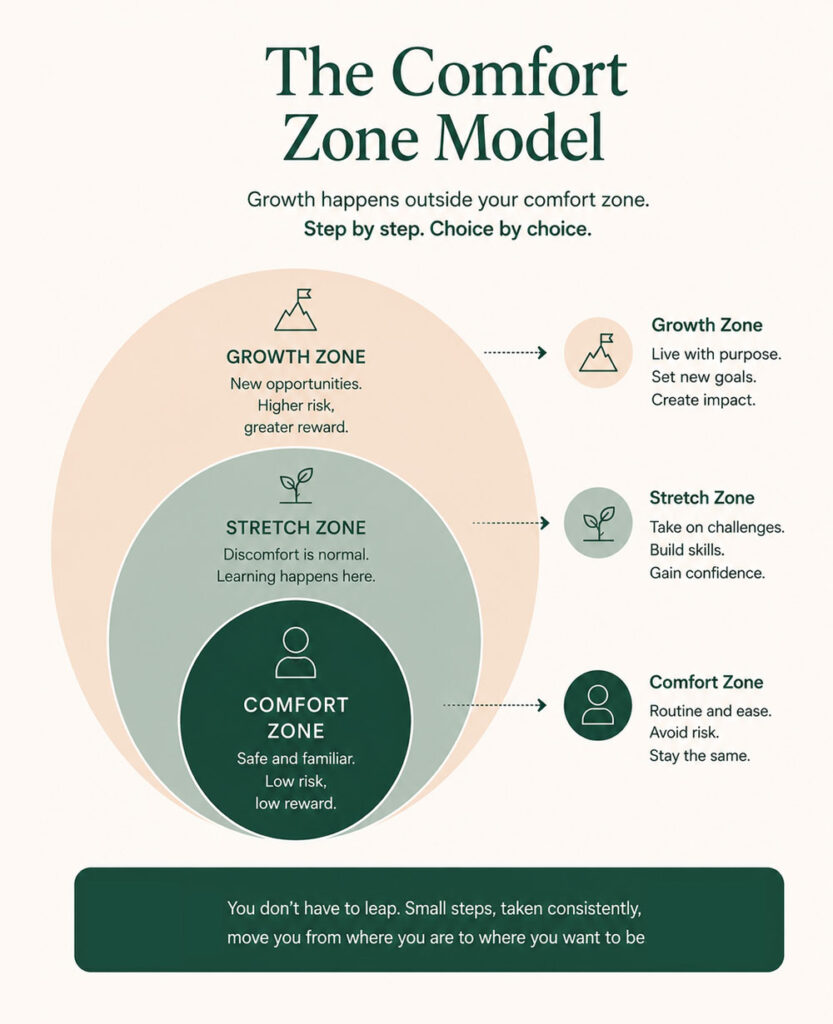
Two models in particular help us as a developing team. The comfort zone model helps people recognise that growth begins where comfort ends, and that the discomfort of change is part of building resilience rather than a sign that something is wrong.
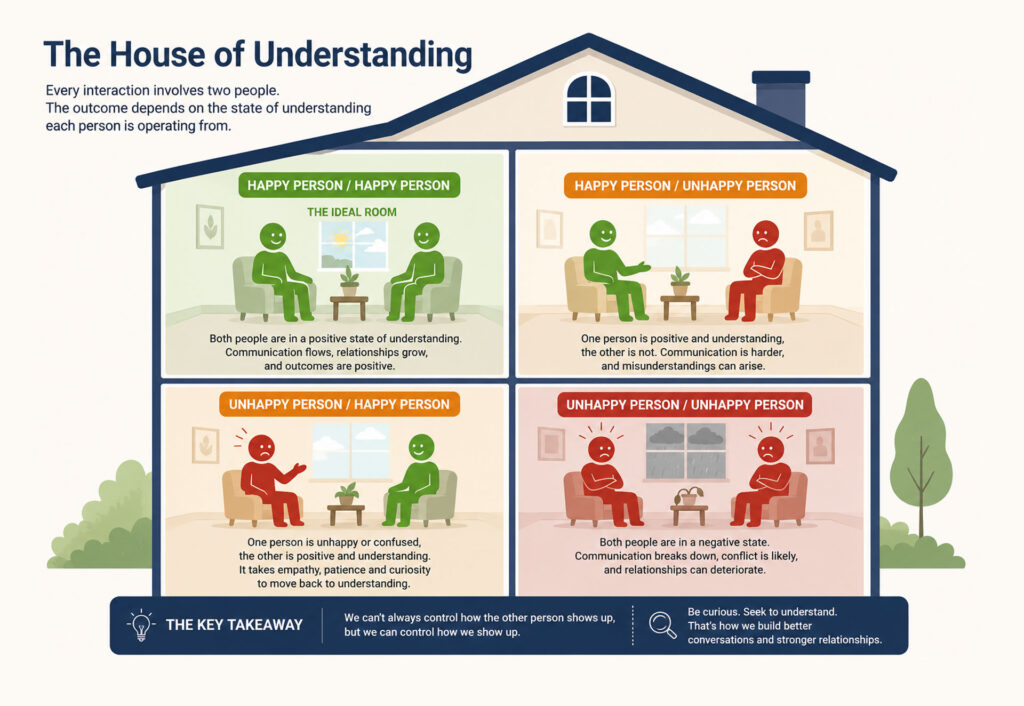
The house of understanding is a way of navigating disagreement, where the goal is always to reach the room marked win/win, the outcome that genuinely works for both parties. Both are easy to teach, easy to remember, and useful in everyday conversations.
10. Get expert support when needed
To return to point one: employing people comes with complexity, and it is not always something to navigate alone. Seeking expert advice early, whether in HR, legal, or organisational development, is often far less costly than dealing with issues once they have escalated. It also helps protect the mental wellness of everyone involved, leader included.
Need support balancing the demands of running a business?
If you are navigating the realities of running a team and balancing the human side of leadership with the financial side of the business, we can help you bring clarity to both in a practical, no-pressure way.

• Already a Harland client: Get in touch with your Client Manager to talk things through.
• New to Harland: Book a free discovery call to explore how we can support you with strategic financial and business guidance that aligns with your goals and your values.